
Roads, mountain passes and access to Spain around Saint-Lary: all the useful information before you leave
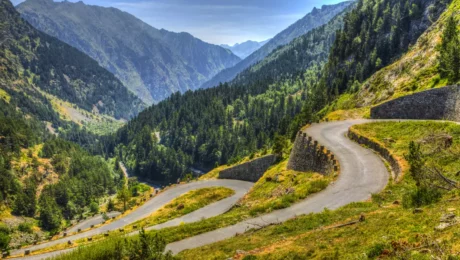
Between great Pyrenean passes, panoramic roads, access to the Néouvielle lakes and passage to Spain via the Bielsa tunnel, the Aure valley offers exceptional terrain for cycling, hiking, mountain biking and mountain road trips.
But in the mountains, conditions change quickly: late snow, roadworks, avalanche risks, temporary closures or regulated traffic can modify access to certain areas.
Here is the complete guide to roads and mountain passes around Saint-Lary with official links to check real-time openings before your trip.
The Bielsa-Aragnouet tunnel: main access to Spain
The Bielsa-Aragnouet tunnel connects the Aure valley to Spanish Aragon via the Bielsa valley. Located above Piau-Engaly, it constitutes one of the major cross-border crossings in the central Pyrenees.
The tunnel provides quick access to:
- Bielsa
- Aínsa
- the Sierra de Guara
- the Spanish Sobrarbe
- the major cycling and motorcycling routes on the Aragon side
Attention :
- The tunnel may close temporarily due to weather, construction work, or safety drills.
- traffic sometimes alternating
- Access prohibited to pedestrians and cyclists
- caution in winter and spring
Official links to Bielsa's tunnel
Temporary closures may occur for maintenance or safety reasons.
The Néouvielle Lakes Route
The lakes route is one of the most beautiful mountain access routes in the Pyrenees.
From Fabian, the road climbs towards:
- Artigusse
- Lake Oule
- Oredon
- Aumar
- Aubert
- Cape Long
The road crosses the Néouvielle Nature Reserve with exceptional landscapes between mountain pines, granite and high-altitude lakes.
Opening of the lakes road
The route is generally:
- closed in winter
- Open between late May and early November depending on snow conditions
Some sections may open gradually:
- Artigusse only
- then Oredon
- then Aubert / Aumar / Cap de Long
During the summer season:
- Regulated traffic after Orédon
- Climbing is sometimes prohibited during the day
- Mandatory shuttles according to the schedule
Currently, some areas around Orédon remain subject to safety work.
Useful links Néouvielle
- Official information about Saint-Lary – major sites and routes
- Orédon refuge information
- Local information for the Aure Valley and mountain roads
The Portet pass
The Col du Portet has become legendary thanks to the Tour de France.
From Saint-Lary, this spectacular climb leads to an altitude of over 2200 meters with:
- panoramic view of the Néouvielle massif
- hiking access to the Bastan lakes
- exceptional road cycling route
The road closes completely in winter.
Reopening date (generally):
- end of May
- early June, depending on snow conditions
Rioumajou Valley
The Rioumajou valley is accessible from Saint-Lary via a magnificent forest road leading to the Frédancon car park.
This sector is highly valued for:
- hiking
- gravel
- trail
- Mountain biking
- access to the old ports towards Spain
Among the major historical events:
- Port of Plan
- Port of Ourdissétou
These passes are for pedestrians only but represent major historical routes between the Aure valley and Aragon.
Where can I check the opening status of roads and mountain passes in real time?
The most useful website in the Hautes-Pyrénées
You will find there:
- mountain pass openings
- works
- roads closed
- weather risks
- mountain traffic
- Snow and safety information
Tips before heading to the mountains
Even in summer:
- bring warm clothes
- check the weather
- anticipate temporary closures
- fill up before reaching certain isolated areas
- check the regulated traffic times at Néouvielle
By bicycle or mountain bike:
- The descents can be long and cold.
- Beware of herds and vehicles
- Heavy traffic around the lakes in July/August
The most beautiful routes around Saint-Lary
From Saint-Lary, it is possible to continue:
- Portet pass
- Néouvielle Lakes Route
- Bielsa tunnel
- Piau-Engaly climb
- Rioumajou valley
- Spanish passes of Sobrarbe
An exceptional site for:
- road bike
- Mountain biking
- gravel
- motorcycle
- vanlife
- hiking
The Aure Valley remains one of the best base camps in the Pyrenees for exploring the mountains and Spain in just a few kilometers.
Official sources and road information:
- Published in MOUNTAIN
Bosch Performance Line CX: why this motor transforms the Santa Cruz Vala into the ultimate enduro machine
THE Santa Cruz Vala This marks a strategic turning point for Santa Cruz. For the first time, the Californian brand is abandoning Shimano on its "all mountain/enduro" e-bike to integrate the renowned motor Bosch Performance Line CX.
And that's no coincidence.
The Bosch CX is now considered one of the world's leading e-MTBs for serious riding: controlled power, natural handling, an extensive after-sales service network, and ultra-efficient intelligent modes for mountain biking. Combined with the Vala's state-of-the-art frame, this results in a bike designed to shred downhill... but also to climb technical lines that were impossible just a few years ago.
At the house of Evolution 2 Saint-Lary, This choice seems particularly coherent for a committed Pyrenees/mountain activity.
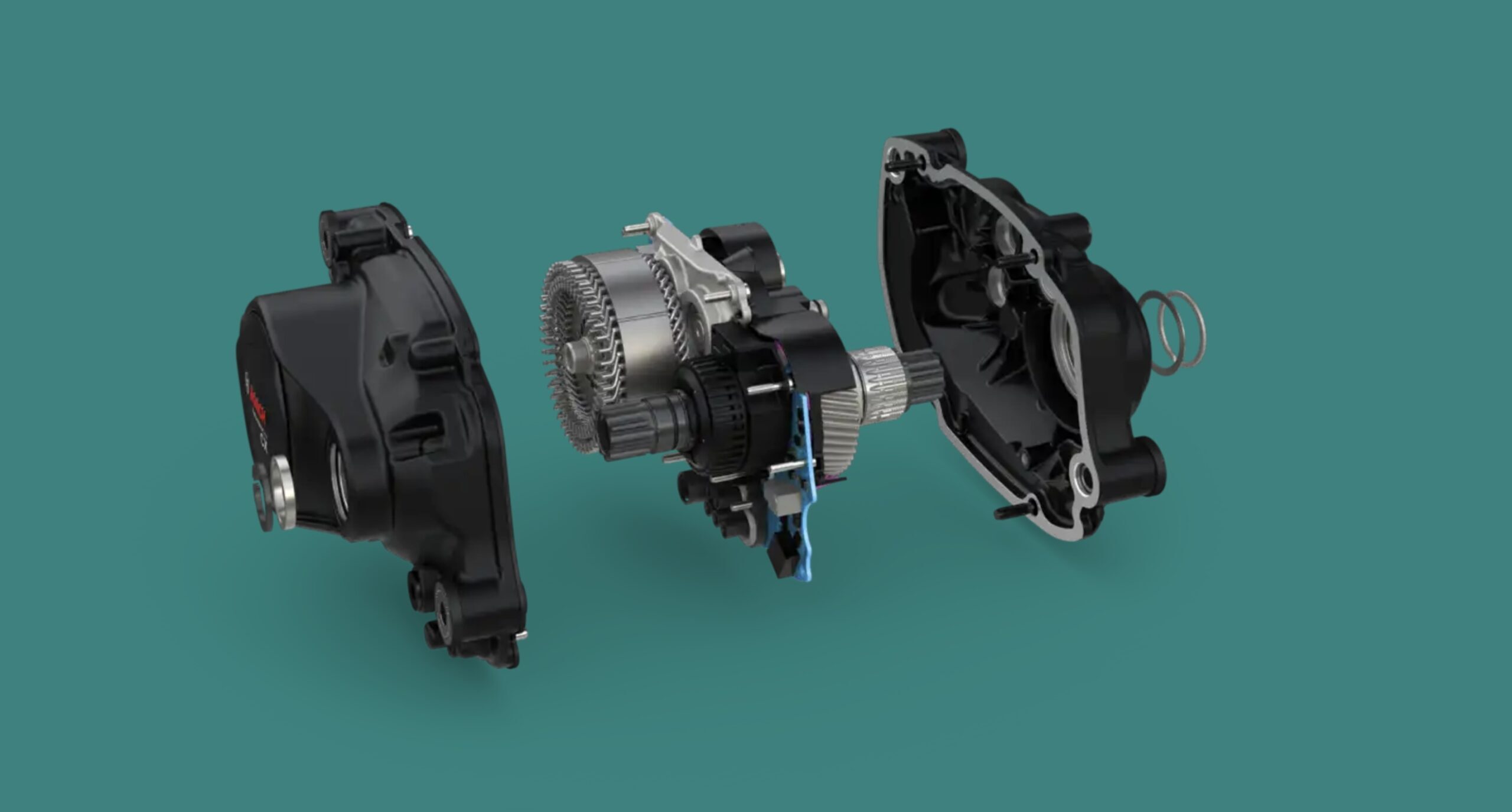
The Bosch Performance Line CX motor: what exactly is it?
The Bosch Performance Line CX is Bosch's top-of-the-range “eMTB” motor.
The Santa Cruz Vala features the latest generation of the Bosch Smart System with:
- up to 85 Nm of torque in standard configuration
- up to 600W power
- ultra-progressive assistance
- advanced electronic management
- Bosch Flow app
- Customizable modes
- ABS/Kiox compatibility / navigation / OTA updates
Bosch focused primarily on one essential point: the feeling on the ground.
Why Bosch on the Santa Cruz Vala?
The Vala is not simply “a Santa Cruz with a Bosch motor”.
The bike was literally developed around the Bosch CX.
Santa Cruz explains that it abandoned its historic VPP system in order to achieve better kinematics with the integration of the Bosch motor. The result: a new 4-bar/Horst Link chassis with more freedom in its suspension settings.
In practical terms, this means:
- greater sensitivity
- better grip on technical climbs
- More neutral behavior on descent
- more stable bike at high speed
- better compatibility with aggressive e-bike use
The Vala thus becomes a true “mini DH that pedals”.
The main strengths of the Bosch Performance Line CX on the Vala
1. Impressive traction on technical climbs
This is probably THE strong point of the Bosch CX.
The engine detects:
- your strength on the pedals
- the pace
- the inclination
- the acceleration of the bicycle
Everything is analyzed in real time to deliver extremely natural assistance.
On the steep, rugged climbs typical of the Pyrenees:
- roots
- shale
- steps
- pins tightly
…the Bosch CX remains very controllable.
The eMTB mode is particularly impressive: it automatically adjusts the power without needing to constantly change modes.
2. A powerful engine… but controllable
Some recent engines are designed to achieve maximum power.
Bosch has long favoured balance:
- autonomy
- reliability
- control
- motor skills
The result:
- less of an “on/off” effect”
- less skating
- More precise cycling in the technical aspects
Even though Bosch now allows performance to be increased via software up to:
- 100 Nm
- 750 W
- 400 % assistance
…the philosophy remains very much “mountain piloting”.
3. Excellent real-world battery life
The Santa Cruz Vala typically uses a Bosch 600 Wh battery.
On paper this seems inferior to some competitors in 750 Wh.
But in practice, Bosch's performance is excellent.
Several field tests show very high autonomy despite demanding use.
For a typical mountain outing:
- 1200 to 1800 m D+
- eMTB mode predominant
- technical terrain
…the autonomy remains very consistent.
And most importantly:
- the bike remains dynamic
- lighter
- more player
It's a genuine behavioral choice rather than a race for the "biggest battery number".
4. The Bosch Smart System truly changes the experience
The Bosch Flow App offers a great deal:
Useful functions:
- customization of modes
- GPS navigation
- autonomy monitoring
- statistics
- digital lock
- OTA updates
- Extended Boost setting
The system is now one of the most advanced on the eMTB market.
Bosch CX vs Shimano EP801: the real match
The Santa Cruz Heckler used Shimano.
The Vala is now being used by Bosch.
Why is this change important?
| Criteria | Bosch CX | Shimano EP801 |
|---|---|---|
| Couple | 85 Nm (100 Nm possible) | 85 Nm |
| Engine sensation | More natural | More sporty/direct |
| Network after-sales service | Excellent | More variable |
| Application | Very accomplished | Correct |
| Modes Management | Ultra intuitive | More technical |
| Technical upgrade | Reference | Very good |
| Noise | More audible | More discreet |
| Accessory compatibility | Very large | More limited |
In a logical sense:
- premium rental
- mountain practice
- heavy use
- need for reliable after-sales service
…Bosch is extremely reassuring today.
The Santa Cruz Vala: for which rider?
The Vala equipped with the Bosch CX is primarily aimed at riders who want to:
- a true enduro e-MTB
- a stable high-speed bicycle
- climbing technical trails
- replace the shuttles
- long mountain rides
- keep the bike playful despite the motor
This is not a “quiet” e-MTB.
It's a bike that makes you want to ride it:
- to attack
- to jump
- to take the angle
- to chain the runs
Several specialist media outlets describe it as one of the best full-power e-MTBs currently available.
Why this combination works particularly well in Saint-Lary
Around Saint-Lary and the Aure Valley, we find exactly the terrain where the Bosch CX excels:
- long technical climbs
- nature trails
- shale
- brittle terrain
- mountain hairpins
- permanent slope variations
Bosch's eMTB mode is formidable:
- enormous traction
- fine power management
- natural regenerations
The Vala then becomes a perfect machine for:
- major mountain outings
- the committed runs
- the electric bike park
- Aure Trails routes
- Pyrenees enduro sessions
Our review of the Bosch Performance Line CX
The Bosch CX is not just “a powerful motor”.
It's probably today:
- the most versatile engine on the market
- the most reassuring for mountain use
- one of the most reliable
- the most suitable for use as a station / guide / premium rental
On the Santa Cruz Vala, the system works particularly well:
- modern geometry
- very active suspension
- ultra-controlled engine
- fun behavior despite the weight
The result:
an e-MTB capable of climbing like a tractor… and descending like a real enduro bike.
Also worth discovering
- Santa Cruz Saint-Lary – our Santa Cruz universe
- Santa Cruz Vala XT Di2 RSV rental in Saint-Lary
- Santa Cruz Vala AL in Saint-Lary
- Bosch eBike Systems
- Where to go mountain biking in Saint-Lary?
Sources / specialized tests
- Published in Cycling equipment
Flow Trails by Mountain Bike: Definition, Spirit, and Why Everyone's Talking About It
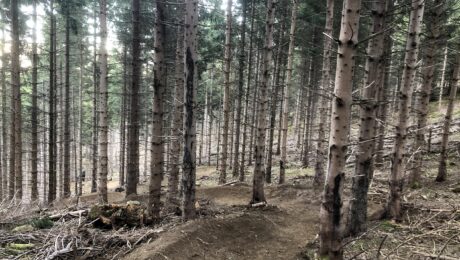
In the world of modern mountain biking, one word keeps coming up: Flow Trail.
Alpine bike parks, mountain bike resorts, YouTube videos, North American destinations or newly developed trails… “flow” has become an essential reference.
But what exactly is a flow trail?
Why do some trails immediately make you want to "let go of the brakes" while others require much more committed riding?
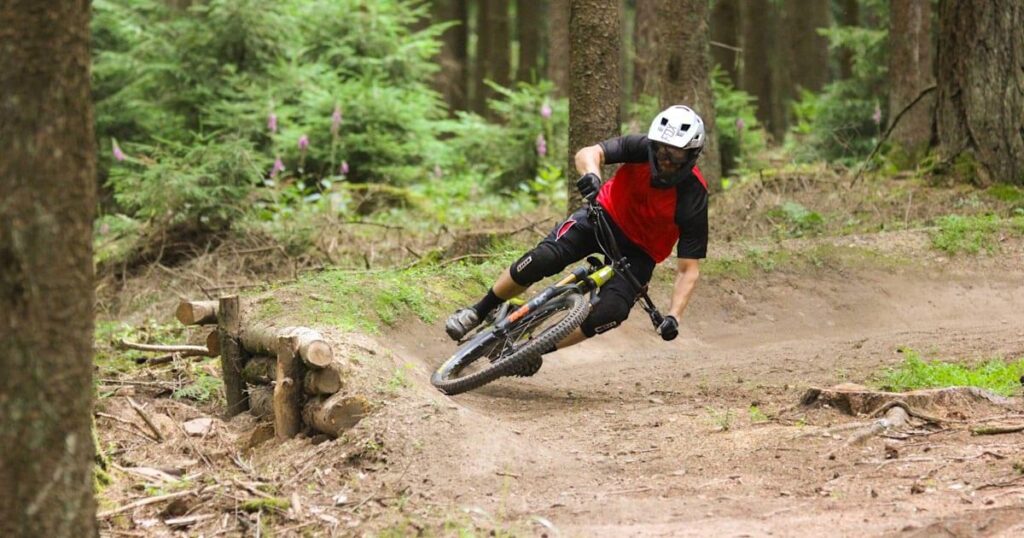
Definition of a Flow Trail
In the world of mountain biking, a Flow Trail (or simply “flow”) refers to a track designed to be:
- fluid,
- rhythmic,
- playful,
- intuitive to ride.
The principle is simple:
The bike should "flow" naturally into the terrain.
The rider then continued:
- the turns,
- the compressions,
- roller skates,
- the supports,
- sometimes the jumps,
with minimal braking and very little acceleration.
The word “flow” does not correspond to an official rating like green, blue, red or black.
He describes rather a design philosophy and a feeling of piloting.
A trail bike designed for the pleasure of riding
A good flow trail allows the rider to maintain:
- speed,
- rhythm,
- fluidity,
- a feeling of ease,
- immediate pleasure.
Unlike a very natural or technical trail, a flow trail generally seeks to avoid:
- the abrupt breaks,
- technical pitfalls,
- the inconsistent areas,
- permanent braking.
The terrain then becomes more “readable” and more mentally accessible.
Flow Trail vs Technical Trail
Two main types of trails are often contrasted:
The Flow Trail
- fluid,
- player,
- modern,
- pace,
- modified to maintain speed.
The technical trail
- roots,
- stones,
- natural slope,
- pins tightly packed,
- crossings,
- greater technical commitment.
Neither is “better”.
These are simply two very different riding experiences.
The best mountain biking areas often combine:
- natural mountain trails,
- and more accessible and fun flow trails.
The characteristics of a true Flow Trail
A homogeneous terrain
A flow trail typically has:
- few aggressive stones,
- few brittle roots,
- a relatively consistent grip,
- a rolling surface.
The goal is to maintain speed without being "taken out" of the rhythm.
Banked turns (berms)
Berms are practically the signature of modern flow trail running.
These banked turns allow:
- to maintain speed,
- to link the curves naturally,
- to generate driving pleasure,
- to make the trail more intuitive.
Rollers and compressions
The terrain plays a central role.
We often find:
- roller skates,
- waves of terrain,
- compressions,
- small ground movements that can be pumped.
The rider can then:
- generating speed without pedaling,
- play with the terrain,
- “Pumping” the supports like in BMX or pumptrack.
Jumps that are often accessible
Modern trail running often incorporates:
- small tables,
- rideable gaps,
- double secure,
- jump options.
The general idea remains:
- to offer fun,
- without making trail running reserved for experts.
The “flow” does not define the level
One important point:
A flow trail can be green, blue, red, or even black.
The flow describes the smoothness of the trail, not its difficulty.
Example: Green/blue flow
- moderate slope,
- limited speed,
- avoidable jumps,
- Ideal for exploring and families.
Example: Red Flow
- high speed,
- strong support,
- larger tables,
- Stronger physical engagement.
Why flow trails are exploding in modern bike parks
Flow trails have become the flagship product of modern mountain biking destinations.
For what ?
Because they offer:
- immediate pleasure,
- a feeling of rapid progress,
- broad accessibility,
- high customer satisfaction.
It's today:
- the favorite track of many recreational riders,
- the most profitable track in terms of visitor numbers,
- often the gateway to modern downhill mountain biking.
Major destinations such as:
- Whistler,
- Squamish,
- modern alpine resorts,
- the new generation of bike parks,
have developed this concept extensively.
The flow trail: a philosophy, more than just a trail
A true flow trail is not simply a “shaped” track.
He must:
- maintain a consistent speed,
- remain intuitive,
- avoid inconsistent traps,
- to allow movements to be linked together naturally.
Otherwise, the riders will probably talk about:
- jump line,
- of a prepared track,
- of DH,
- or simply a “shaped” track.
Flow is first and foremost a feeling.
How to describe a Flow Trail on a mountain biking website
Some examples of effective formulations:
Accessible version
A smooth and fun trail alternating between banked turns, rollers, and fast sections. Ideal for linking curves with rhythm and fluidity without requiring high technical skill.
More modern version
Modern singletrack flow trail, designed to prioritize speed, riding pleasure and fluidity.
Version geared towards the general public
A playful and fast track with many berms, clear terrain and natural transitions accessible to a wide audience.
Why is the flow so popular?
The success of the flow trail comes from a rare balance:
- sensation of speed,
- low stress,
- immediate pleasure,
- rapid progress,
- aesthetics of piloting.
Even an intermediate rider can feel like they are “riding well”.
And that's probably the whole strength of flow:
to make you want to do another run immediately.
- Published in Mountain biking
Mountain biking trail ratings in Saint-Lary – Aure Valley, Pyrenees
Technical level, commitment, flow, difficulty and exposure of mountain bike trails.
Mountain biking is not just about the color of the trail.
Between a fun singletrack in the forest, a technical descent in the shale, a challenging enduro route or a great alpine crossing, the sensations and requirements can be totally different.
In Saint-Lary and the Aure Valley, the terrain is constantly changing:
Fir forests, fast tracks, Pyrenean scree slopes, tight switchbacks, high-altitude sections, natural paths or more modern and shaped trails.
The objective of our rating system is simple:
- to offer immediate reading; ;
- to remain understandable to the general public; ;
- to maintain real credibility for experienced riders.
The most effective choice is therefore a clear rating out of 5, inspired by real terrain and rider experience.
This method allows you to better choose your path based on:
- his technical level; ;
- his physical condition; ;
- his desire to fly; ;
- its level of commitment; ;
- the desired sensations.
Why is a proper mountain bike rating system essential in the mountains?
In the mountains, two "red" ski runs may have absolutely nothing in common.
A route can be:
- Not very physical but very technical; ;
- extremely fast-rolling but very challenging; ;
- technically accessible but long and arduous; ;
- very fluid but exposed to the void.
In the Pyrenees, the variety of terrain around Saint-Lary makes this precision essential.
A good rating allows you to:
- to avoid level errors; ;
- to improve security; ;
- to choose a suitable outing; ;
- to better prepare one's equipment; ;
- to progress gradually.
It's also a way to better understand the spirit of a trail run before committing to it.
Mountain biking technical level
The technical level represents the difficulty of piloting the terrain.
It notably takes into account:
- the slope; ;
- the obstacles; ;
- the stones; ;
- the roots; ;
- pins; ;
- the necessary precision; ;
- adhesion management.
Technical rating
1/5 – Very easy
Rolling terrain with little technical difficulty.
Suitable for beginner athletes and families accustomed to cycling.
2/5 – Easy to intermediate
A few simple obstacles and small technical sections.
It already requires a minimum level of proficiency.
3/5 – Advanced Intermediate
Varied terrain requiring good bike handling skills.
Trajectories are starting to matter.
4/5 – Technically demanding
Regular technical checks:
slope, stones, switchbacks, brittle terrain, steep sections.
5/5 – Expert
Expert piloting required.
Challenging terrain, demanding and sometimes very technically physical.
Mountain biking fitness level
The physical level represents the effort required to complete the route.
It takes into account:
- the distance; ;
- the difference in elevation; ;
- the duration; ;
- altitude; ;
- the difficulty of the climbs; ;
- the repetition of efforts.
Physical rating
1/5 – Accessible
A short outing accessible to all.
2/5 – Moderate
Reasonable effort with some uphill sections.
3/5 – Supported
Good physical condition recommended.
4/5 – Demanding
Long climbs or large elevation changes.
Managing significant effort.
5/5 – Very physical
Reserved for trained practitioners.
Long, alpine or very demanding outings.
Overall difficulty
The overall difficulty represents the general level of the course.
She mixes:
- technique; ;
- physical ;
- length ;
- mountain environment; ;
- overall intensity of the ride.
Overall difficulty rating
1/5 – Sports Beginner
Accessible with minimal cycling experience.
2/5 – Easy Intermediate
First real mountain sensations.
3/5 – Advanced Intermediate
A serious career path already requiring experience and consistency.
4/5 – Difficult
Requires expertise, experience and field management.
5/5 – Committed Expert
Mountain route reserved for experienced riders.
Commitment
Commitment represents the possible consequences of an error and the difficulty of "getting out" of the course.
This is an essential criterion in the mountains.
It takes into account:
- isolation; ;
- fatigue; ;
- the exhibition; ;
- access to emergency services; ;
- ongoing technical expertise; ;
- the difficulty of turning around.
Commitment quote
1/5 – Not very committed
Easy return and safe terrain.
2/5 – Light commitment
Some more isolated or technical sections.
3/5 – Mountain Commitment
Terrain requiring vigilance and independence.
4/5 – Strong commitment
Mistakes that can have real consequences.
5/5 – Very committed
Strong commitment to mountaineering.
Reserved for experienced riders.
Flow: the fluidity of the trail
The “flow” has become a major reference in the modern mountain biking world.
A trail with flow gives the feeling that the bike is "flowing" naturally:
- pace ;
- speed ;
- supports; ;
- turns; ;
- compressions; ;
- fluid sequences.
The rider brakes little and naturally maintains speed.
Flow quotation
1/5 – Not very fluid
A choppy and uneven journey.
2/5 – Some enjoyable sections
The rhythm remains discontinuous.
3/5 – Good flow
Good overall fluidity and consistent sensations.
4/5 – Very fun
A fast-paced, modern and playful trail run.
5/5 – Maximum flow
Continuous sensations and very high driving pleasure.
Exposure
The exposure represents the risk associated with the environment of the trail.
It does not correspond to pure technical difficulty, but to the possible consequences of a fall.
Criteria taken into account
- empty ;
- lateral slope; ;
- ravines; ;
- narrow passages; ;
- rocky environment.
Exposure levels
Weak
Little or no risk related to the surrounding terrain.
Average
Some passages require attention.
Forte
Presence of voids or exposed sections requiring skill and concentration.
Why is this rating system particularly useful in the Pyrenees?
The mountain biking routes around Saint-Lary and the Aure Valley offer exceptional diversity:
- bike park; ;
- enduro; ;
- e-MTB; ;
- natural singles; ;
- flow tracks; ;
- technical descents; ;
- Alpine routes.
The same rider can search for:
- a fun outing; ;
- high-level piloting; ;
- modern flow; ;
- a challenging mountain adventure.
This rating therefore allows:
- to better choose your route; ;
- to avoid unpleasant surprises; ;
- to adapt one's equipment; ;
- to improve the overall experience.
Our tips before you go for a ride
Even with a good rating, the mountains remain a demanding environment.
Before each outing:
- check the weather; ;
- adapt your equipment; ;
- drink enough water; ;
- bring a repair kit; ;
- charge your phone; ;
- Inform someone of your itinerary.
For the most challenging routes, the use of a GPS with GPX track is strongly recommended.
At the house of Evolution 2 Saint-Lary, It is possible to rent GPS bikes with pre-loaded mountain bike and road routes to ride more serenely in the Aure Valley and the Pyrenees.
Cycling in Saint-Lary: a complete mountain biking destination in the Pyrenees
Between bike park, natural enduro, e-MTB, flow trails and major mountain routes, Saint-Lary and the Aure Valley now offer one of the most varied mountain biking terrains in the Pyrenees.
The objective of this rating is simple:
helping you find the right ride, at the right time, with the right level of commitment.
Because a good trail run isn't just about difficulty:
It's primarily about pleasure, sensations and mountain experience.
- Published in Mountain biking